Greetings Fellow Divers,
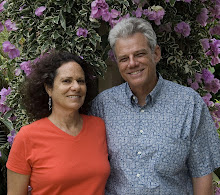
Maurine and I have been wondering about blogging. We know some of you seem to really enjoy reading about what we’ve been doing. But a blog is not nearly as timely as a posting on Facebook, so we are questioning the value of continuing the blogging process. To us, the value of the blog is that it allows us to write in greater detail about our wanderings. If you like the blog let us know and we will continue the process. Otherwise, check us out on FB, where we post much more often. On FB search for Burt Jones or Secret Sea Visions. And, do let us know what you prefer, bits and pieces on FB or the longer blog approach.
It has been four months since our last blog post so I will bring you up to date. We spent the first five days of August sleeping on the floor of a Chinese print shop in a not so lovely Jakarta neighborhood. Printing a book is exciting, but the presses seldom stop, and having press checks every two hours, 24/7, is very fatiguing. Thankfully, that ordeal is over and a couple of days ago we received the first bound copies of Diving Indonesia’s Bird’s Head Seascape. It looks super and we can’t wait for you all to see it. As luck would have it, we began printing on the first day of Ramadan, the fasting month for observant Muslims. It was poor timing on our part, but the printer worked with us and got the job done. The book will be available at all Periplus bookstores in Bali and Jakarta as soon as Ramadan is over.
I haven’t mentioned that we are very proud of the fact that every marine life image in the new guidebook is new; no underwater photos from our previous book, Diving Indonesia’s Raja Ampat, are included in the new guide. We have been fortunate to have dived in the Bird’s Head so often and have so many wonderful images of the area that we could do another book and still not repeat ourselves! We listened to your suggestions; the new guide has much improved dive site maps and is easier to read. Enjoy and let us know your comments.
We are now in the midst of the tedious process of organizing the shipping of some of the book stock to the USA. Before 9/11 this was a simple endeavor, but times have changed. Or hadn’t you noticed? To give you an example, the pallet of books has to have it’s own “documented” security clearance. Finding a US certified inspector in Jakarta, despite it being a city of 17 million +, is not exactly a matter of looking them up in the Yellow Pages. Fortunately our Singapore agent has found the ways and means to get this done. But talk about jumping through hoops. There are at least 20 different forms that have to be in place before the books can be shipped. But that’s not really the issue. All those forms are so the books will clear US Customs upon arrival. If all the documentation is not in order US Customs will not accept the shipment. They don’t ship it back either, they just destroy it. And, for their trouble, we would be fined $5000. Yikes! Please keep your fingers crossed.
If we indeed have all our paperwork in order, the books should be in the states by late October. It will “officially” debut at DEMA in early November but it will be available on our website, from our US distributor, New World Publications (www.fishid.com) and on Amazon as soon as they clear customs. We will post an announcement on the website and FB as soon as they are arrive.
Have we been diving lately? NO. Are we ready to go diving? YES. I’m going out on Pindito in early September, but Maurine won’t get wet until our next Secret Sea trip in late September.
That doesn’t mean we haven’t been photographing, though. Bali is a treasure trove of accessible exotic subjects. We recently spent a few days in Ubud, where a royal cremation took place. What a spectacle! The cremation tower, used to transport the corpse from the royal palace to the Puri Dalem (Temple for the Dead) where it is cremated, was easily five stories high. It takes over a 100 men to carry it. The bull, the final vessel for the body, was huge as well, about twice the size of the largest real life bull you will ever see. I staked out a spot to photograph the scene at the death temple at 11:30 AM. There were already at least a 1000 people there who arrived before me. I found a good vantage point, however, but it meant sitting in the hot sun while fighting the mounting throngs to maintain my view corridor. The crowd grew to easily over 10,000, but I’m not good at estimating numbers and it could have been much larger. The tower and bull, to which the body is transferred at the temple prior to being set on fire, didn’t arrive until 3 PM. Finally at around 6 PM the bull, now containing the corpse, was ignited. It was a long, hot day to say the least. I must have drunk 10 liters of water and still felt dehydrated, not to mention sunburned to a crisp.
Prior to the cremation we photographed the Bali Kite Festival. Kites are flown to honor the gods. I’m sure the gods were duly impressed. These aren’t your typical diamond-shaped, Walmart variety, kites by the way. These things are colossal. Some of them are over 100 feet long! I will post a few images on the website and on FB of all these happenings soon. Of course, even if there is not an event of epic proportions taking place there is always something interesting to photograph in Bali. We’ve been visiting beautiful, off the beaten path, temples, which despite Bali’s overloaded tourist scene, are never crowded. Also jukungs, the native Balinese-style outrigger fishing vessels, with their big eyes and wildly painted hulls, make good subject matter.
Back to diving. For those of you interested in liveaboards, we just had lunch on Damai 2. We’ve been watching it being “finished out” for the last couple of months, but hadn’t seen it in the last few weeks. We could tell it was going to be something special, but were unprepared for the grace and beauty of this ship. It is completely over the top luxurious! If I had to choose one word to describe it, that word would be magnificent. This boat is going to raise the bar and every other operator is going to be jealous. We can’t wait for our first charter on September 30th.
In the meantime we are working on a Bird’s Head Seascape slideshow/movie to accompany the book, which will be posted on our website and on You Tube. If you haven’t seen the show we produced for the first book go to our home page and click on the movie (left hand column). The software program we are using to create the program is giving us fits, but the real problem is culling the photos for the show. Unfortunately some of our favorites images from the new book won’t make it. Don’t worry though, since vertical images don’t work well in the slideshow many “landscape” formatted images that didn’t make the book either will be included in the movie.
Best Fishes,
Burt and Maurine
Tuesday, August 30, 2011

Saturday, April 16, 2011
Just another trip to Raja, NOT!
Maurine and I just returned from another wonderful trip to Raja Ampat. We’d like to thank all our Secret Sea dive buddies for joining us. And we’d like to thank new comers Ray & Sheri and Rita & Dieter for fitting in so well. As some of you may recall this trip’s original itinerary was planned to begin in Ambon, then to transit through the Banda Sea, before finishing in Raja Ampat. Due to two major storms, on either side of the equator, our live-aboard The Seven Seas was not able to meet us in Ambon. Everything had to be rescheduled. Many of our divers, expecting to meet us in Ambon, were already in the country, but they were scattered all over Indonesia’s archipelago. What a mess! With 7 Seas help we were able to locate everyone, reschedule flights, etc. and the trip started on time and finished successfully in Sorong. Major kudos and our heartfelt thanks go to 7 Seas.
Our mission, photographically, on this trip was to fill in a few gaps for our upcoming guidebook, Diving Indonesia’s Bird’s Head Seascape, which will be published later this year. In fact we will be house, or should I say, office-bound for the next few months until we go to press. The book will be an expanded version of our original guidebook, Diving Indonesia’s Raja Ampat, published in 2009. The new book is planned to debut at DEMA in November and will include Cenderawasih and Triton Bays along with Raja Ampat.
One of the highlights of the trip was the best Manta encounter we’ve ever had in Raja. We’ve never had manta interaction like this before! There were 8 mantas around the site for the entire dive. They seemed to enjoy our presence and frequently swam out of their path to play with the divers. Jerry had a manta hovering over his head for 15 minutes while Ingo snapped away, and Linda filmed the scene for 7 Seas. BTW, right next to the manta cleaning station, and just out of the mantas path, is a small group of coral heads where a few cometfish live. Unlike most cometfish, which are very shy, these fish seem accustomed to divers and don’t mind being photographed. The group also photographed sea moths on the slope above the mantas, so now you need both macro and wide angle for the manta dive. What a dilemma!
Other highlights include Todd’s incredible spot of a frogfish carrying its eggs on a night dive at the Cendana pier in Aljui Bay. Dave got some great images and we plan to use one in the new guidebook. At “Happy Ending” on Batanta we found both a mimic and a wonderpus octopus. And on a new night dive at Balbulol, which we call “Surprise”, dive guide and cruise director Karl found a blue-ring octopus. Fortunately I did a rare night dive was able to get a couple of nice images. Even though we had to deal with a stiff current “Mayhem”, one of our favorite sites in north Raja, proved worthy of its name. We had fish galore and even a few grey reef sharks, spotted by Rowan, joined in the frenzy. “Blue Magic” also surpassed expectations with massive schools of barracuda, trevally, surgeonfish and fusiliers all swirling together.
For those of you who have never been to Raja and would like to go with us please see the “Travel” page on our website for availability.
So now the fun begins. While most of you are enjoying springtime we’ll be at our desks for the next few months working on the text and layout of the new guidebook. We’ll keep you posted on our progress from time to time.
Cheers and Best Fishes,
Burt and Maurine
Tuesday, January 4, 2011
Happy New Year
Maurine and I would like to wish you all a Happy, Healthy New Year. We hope it is prosperous but more importantly our wish is that you all get to dive some place special this year.
Since our last outing we’ve begun working on an expanded revision of our 2009 Raja Ampat dive guide. The new book will encompass the entire region known as the Bird’s Head Seascape. In addition to Raja, it will include Triton and Cenderawasih Bays. Scheduled for publication later this year, it will debut at DEMA 2011.
For the holidays we took a break from diving and visited Laos (for Christmas) and Thailand (for New Years). We had a blast. Laos was an incredible surprise and we loved our time there. We landed in Vientiane, the capital city. One of the reasons we chose Laos was that we had heard it wasn’t crowded. The population of Vientiane is only 300,000, which is nothing when you live on a small island with a population of over 3.5 million! Laos has a long history of French heritage so the architecture is a combo of Asian and European. And the food, OMG, it was fabulous. Laotian food can best be described as a mix of Vietnamese and Thai, with the emphasis on lots of fresh, fresh lettuces and veggies. Of course there was plenty of European choices, mainly French and Mediterranean.
Due to the nature of the import laws in Indonesia, “non-essential” imported items like cheese and wine are scarce and very expensive. That is not the case in either Laos or Thailand. We usually ate Lao for lunch and French, or Italian, for dinner. Vientiane is a culturally interesting city with numerous major, and active Buddhist monasteries; many are quite old. We spent our days walking and photographing these amazing temples. It was so nice to be able to walk without sweating.
We thought Vientiane was nice until we arrived in Luang Prabang. LP is located "up country" on the Mekong River and the weather was cool and cloudy. Believe it or not, a sweater was comfy in the evenings and early mornings. The old town of LP is a World Heritage Site. There are over 60 monasteries in this sleepy laid-back town and most of them are active. In the World Heritage section of town motor vehicles are kept to a minimum, which means you can walk down the middle of the street without fear. Bars close at 10pm. The people are lovely and friendly, and the sites are spectacular. The surrounding region is an adventure lover’s paradise and there are many remote areas where trekking to visit isolated “hill tribes” is encouraged. We are insatiable collect-a-holics and the crafts of the region, especially the woven textiles, are superb.
We couldn’t have been happier. Great food, culture, crafts, and an uncrowded friendly population that believe in karma. As photographers, we never lacked for subjects. What a find. Go there before it’s “discovered”, but please don’t tell everyone about it!
Bangkok, well what can we say? It’s fun but very, very crowded. This was our 3rd visit to Thailand and it was a great spot to ring in the New Year. BTW, the bars never close!
We are now back in the office continuing to work on the new book and planning our diving travel for years to come. Thankfully all of our 2011 trips are full and for 2012 there are only a few spots still available. So if you want to “have the best dive trip of your life” book now!
Even though our 2013 schedule is not yet posted (we still have a few more details to work out) we are planning to make 2013 “The Year of the Bird’s Head”. Keep an eye on our travel page where we will be offering journeys to all the region’s areas including Raja, Triton Bay and Cenderawasih Bay. Even though it seems far away our trips fill fast so don’t wait too long. We’ll keep you posted and hopefully travel with many of you in the years to come.
All the best fishes,
B&M
Tuesday, December 7, 2010
Twice the Fun
We just returned from two very pleasurable Secret Sea Visions trips; through the Banda Sea to Raja Ampat and then a pure Raja Ampat departure.
Our first group was with friends, part of the old Diving Docs group. The trip began in Ambon where we spent the first day diving Indonesia’s first “critter haven”, the Twilight Zone in Laha Bay. In 1995, while on a trip with Larry Smith, we “discovered” Laha’s amazing, bizarre critter life, but we haven’t dived there recently. On Steve’s, the Diving Doc’s founder, first dive he and his wife Linda literally landed on top of a pair of harlequin shrimp eating a seastar. These animals are rare, but the group saw 5 during our first day of diving. Frogfish were abundant and Phil got a great shot of one yawning. The group saw many pairs of mating pygmy cuttlefish, seahorses, yellow ribbon eels (the rare phase), and countless other oddities. What a way to start!
We spent the next few days zigzagging across the Banda Sea. One of the highlights was our visit to the Banda, or Spice Islands, the fabled islands Columbus was searching for when the Americas got in his way. Everyone’s favorite dive site was Run Island. Never heard of it? Likely not, but this island was part of a trade between the Dutch and the British in 1667. If the British had not traded Run for a similar size island in the Americas, called New Amsterdam (Manhattan) we’d all be speaking Dutch!
Our last stop in the Banda Sea was at Koon Island, at a site Larry Smith named “Too Many Fish”. Even though two decades have passed since Larry named this site, the fish life is still off the scale. The fish biomass was so thick that at times it blocked out the sunlight.
An overnight steam brought us to SE Misool in Raja Ampat, where we spent the rest of the trip. The Docs had been to Raja before, but they all agreed they had never seen Raja like this. One reason may be that we took them to our new favorite sites, many of which we discovered only recently. The Daram and Balbulol sites are not only as pretty as many of the more popular sites, but they have the distinct advantage of being off the well-trodden path of most liveaboards.
On our second charter was comprised mainly of prior clients who had also all been to Raja. The only exception being the Johnston bothers, Jeff and John, plus John’s wife, Pam. Even though they are all very experienced divers, this was their first trip to Indonesia and with us. Did they ever get their eyes opened! They were totally blown away.
The group’s interests were diverse. Jeff and John are keen photographers and very easy keepers. The only question they ever asked was “What lens for the next dive?” Pam, who has a hi-stress job, was on holiday. Although she made most of the dives, she was very into relaxing and taking advantage of Damai’s many amenities. Sally, from NYC, and Judithe, from Paris, France have both worked for environmental organizations and are very knowledgeable and avid divers. Judithe too, is an aspiring photographer. Mickey and Ellen are adopted Texans and very well traveled divers. They’ve been everywhere, numerous times. Mickey is interested in nudibranchs, and Ellen has a passion for Butterfly and Angelfish. Brian, a very distinguished British chap, was up for anything.
They all came with high expectations that were met and surpassed. Since many of the guests were interested in photography, we presented our lecture series, Revealing the Art in the Animal, How to Stop Taking Pictures and Start Creating Images. This multi-part series is designed to help any level photographer improve their image making. Jeff and John, both accomplished photographers, were amazed at their improvement. Judithe, although just getting started, made huge progress as well. Everyone, even the non-photographers enjoyed the shows. Mickey found 7 new (to him) nudibranchs and Ellen recorded more species of butterflyfish than she’d ever counted on a prior trip. Pam unwound and left the boat a very happy camper. Sally enjoyed “the best trip of her life”. And Brian, well, Brian got exactly what he was looking for…a little bit of everything.
Our vessel, the Damai 1, even though it is the same basic size as most of the boats operating in Indonesia, is built for luxury and only holds 8 pampered guests. Damai puts 4 dive guides in the water on virtually every dive. Quickly do the math and you’ll realize that means every buddy team has a guide. Talk about experiencing the reef. Everyone sees everything. It is amazing.
Maurine and I were very happy as well. Not only did we get some new images for the new book, but we also found an excellent new night dive site. The most gratifying thing we received, however, was thanks from our guests for “their best trip ever”. What more can we possibly wish for?
Join us on a Secret Sea Vision charter soon and let us take you on your "best trip ever"!
Tuesday, September 28, 2010
Cenderawasih Bay & Whale Sharks


We just returned from our initial survey of Cenderawasih Bay and we know that many of you are very interested in what we found. Most of our diving, other than on Manokwari’s excellent WWII wrecks, was within Cenderawasih Bay National Park, Indonesia’s largest. This park is huge, half again larger than Raja Ampat; our 16-day survey barely scratched the “surface” of this underwater wilderness.
Cenderawasih, along with Raja Ampat and Triton Bay, makes up the Bird’s Head Seascape. Its reefs look nothing like Raja’s colorful, fish-filled reefs, nor are they similar to Triton Bay’s soft coral wonderland. Pristine and vast, the bay’s reef tops comprise some of healthiest hard coral gardens we have ever seen. Dramatic vertical walls with prolific sponge life abound on the outlying atolls. We found schooling fish along the reef points and ridges.
Cenderawasih also has a few unique features in Indonesia’s pantheon of rich reefs. The bay was geologically isolated until recently, and if you look at a map you’ll see that it is still somewhat confined. This means that less current moves through Cenderawasih’s waters, and therefore there’s less recruitment of marine larvae than in a place like Raja. This isolation has blessed Cenderawasih with a number of very colorful endemic species. Perhaps even more interesting is the fact that many normally deep-dwelling fish species are found here in relatively shallow water. This topsy-turvy reefscape, along with the presence of the world’s largest fish, the whale shark, prompted Dr. Gerald Allen to call Cenderawasih “ the Galapagos of Indonesia’s Reefs”.
Our team included Drs. Mark Erdmann and Gerald Allen who were documenting fish and collecting new species. Mark is head of the Bird’s Head Marine Programs for Conservation International (http://www.conservation.org/). Gerry is the world’s leading tropical marine ichthyologist and the author of numerous popular books on reef fish identification. Also onboard were Titus, a national park ranger with a very enlightened attitude and invaluable local knowledge; Ruland, a UNIPA (University of Papua) graduate assisted Dr. Crissy Huffard, a cephalopod expert and Conservation International staff member, with a mollusk (tridacna clam) genetic study project spearheaded by the non-diving member of our team, Pak Hamed, a UNIPA professor. Maurine and I surveyed the reefs in order to suggest itineraries for liveaboards visiting the area in the future. The detailed results of our survey will be included in the new Bird’s Head Seascape dive guide to be published late next year. Grand Komodo’s excellent crew onboard the Temukira, especially Weka, their dive master extraordinaire, contributed to the success of our trip (http://www.komodoalordive.com/).
Most of the dives Maurine and I completed were short in terms of time, but long in terms of distance covered. We surveyed the reefs on scooters in order to locate potential sweet spots; ten minutes of scootering equals about an hour’s swim for most divers. We dived a few times without scooters to look for potential critter sites, and we did find a nice variety, including, seahorses (not just pygmies!) frogfish, unusual nudibranchs, several ornate ghost pipefish, a number of interesting cephalopods, and tiger shrimp. Mark and Gerry discovered at least 5 new species of fish, including a new dottyback and garden eel. They also increased the species count of Cenderawasih from 884 species to 955. The Bird’s Head fish species count is at 1596 at the moment!
The absolute highlight of our survey was our whale shark experience. The bay’s resident whale sharks have learned that the bagans, floating fishing platforms, throw their dead fish overboard. This is a bonanza of protein enrichment for the normally plankton-eating sharks. The bagan fishermen encourage whale shark visits because the enormous fish are considered good luck. We felt like the lucky ones! The sharks seemed interested only in their free breakfast (all of the action takes place at dawn), and ignore snorkelers and divers. We spent several magical hours with these magnificent creatures and were able to photograph them in quite decent viz. Clear water, unusual fish behavior and cooperative mega-fauna…Gerry might be right. Cenderawasih may well be “the Galapagos of Indonesia’s Reefs”


Monday, August 30, 2010
Cendrawasih, here we come!
Dear Divers,
We just returned from a great trip to Komodo. The park was fab as always. Damai (www.dive-damai.com) is a wonderful home base and their excellent service and numerous divemasters made this a special trip.
We began in Bima on the island of Sumbawa. Just outside the harbor, in the mouth of Bima Bay, we dived a couple of outstanding critter sites. The usual suspects, including bizarre scorpionfish, ghost pipefish, pygmy cuttlefish, a couple of mimic octopus, myriad nudis, and numerous fire urchins were seen and photographed. The fire urchins were enormous, about the size of a basketball cut in half. It seemed like each one was more beautiful than the next and almost everyone had some variety of commensal. Zebra crabs, almost big enough to eat, were the most prevalent and many of them were carrying eggs. Surprisingly quite a few urchins had squat lobsters, and Maurine found one with a crab we’ve never seen before. The Bima sites are excellent critter hunts.
Most of the divers with us on this trip, however, were new to the South Pacific and were expecting excellent viz and great reefs. At Sangean they saw the reefs they had anticipated. The next stop was Banta where we dived a couple of new (to us) sites on Banta’s west side. The most spectacular feature is a lovely, extensive hard coral garden with the most anthias we have ever encountered. Fish completely filled the water column. Additionally, we found a terminal phase “yellow” blue ribbon eel, and Ariel Cohn saw the trip’s first manta! On an outstanding night dive at “Small World” everyone saw their first stargazer.
The next day we finally made it to the park proper. We spent our first day in a bay (Batu Monco) on the NW corner of Komodo and everyone really enjoyed the clear water and easy drifts along the wall and bommie-covered slopes. The following morning we anchored off Gili Lawat Laut where, for the next two days, we dived some of the fishiest sites in Komodo, if not in all of Indonesia. “Crystal Bommie”, which we still call “Easy to Find Rock”, and “Castle Rock”, known to us old-timers as “Hard to Find Rock” were phenomenal. Huge schools of fish and the giant trevallies feeding on them; quite a few sharks, mostly whitetips, cruised the bommie; and a two-meter-long grey reef shark with several blue runners in attendance passed by me a few times. Never close enough for a good photo, of course. The “Fish Bowl” was magical, as always. Zillions of fish and lovely glassfish-covered bommies are the features of this site, along with the mantas that are usually seen at the end of the dive (we did). A nice surprise was a male jawfish with its mouth full of eggs. By this time, Gladys Howard, owner of Pirates Point Resort on Little Cayman Island (www.piratespointresort.com) was duly impressed. Her only disappointment of the entire trip was not getting to dive with her “son”, the late Larry Smith.
Since the SE trades were still blowing to beat the band, we spent the rest of our time in the park diving the better sites in the north like the two “Tatawas”, Batu Bolong, and Pantai Mera (Pink Beach). On the next to last day, however, we got a radio call from Mark Heighs, the cruise director and co-owner of Seven Seas (www.thesevenseas.net). Mark was in South Komodo. He said the winds had calmed and the mantas were abundant, so we sailed down there for our last full diving day. The mantas were indeed there, and on the second dive of the morning a cold (69 degree), clear (100 foot+) current bathed the cleaning station. The resulting photos are the best we’ve ever taken of mantas in the park. It was a wonderful way to end the diving portion of our trip.
The next day we went to Loh Buaya on Rinca Island for a walk to see Komodo dragons. We saw over a dozen dragons, including recently nested females guarding the next generation. All of our guests greatly enjoyed the walk, and it was an excellent way to end the cruise.
As I mentioned earlier, and in our last blog, our next stop is Cendrawasih Bay. We will be surveying Cendrawasih so that it can be included in the next edition of our Raja Ampat guidebook. This book will be expanded to include two destinations in addition to Raja. I imagine the new title will be something like Diving Indonesia’s Birds Head Seascape. We hope to see nesting Leatherback turtles, WWII wrecks, pristine reefs, and oh yes; the resident population of whale sharks. Yes, you are reading “resident”; this population of whale sharks, the world’s largest fish, appears to be permanently located in southern Cendrawasih Bay. Read about the initial results of this survey in our next blog (late September) and a full report in the new book, which should be published in the fall of 2011.
Until September,
Burt and Maurine
Saturday, August 14, 2010
Time Slipping Away
Hello fellow divers,
I had hoped to give you a rundown on everything we have been doing since the last blog, but we, and Secret Sea, have been so busy; the time just keeps slipping away. Plus we just spent a fun week with our house guests, Kerri Bingham and Hergen Spalink, managers of Lembeh Divers, www.lembehresort.com. Check out Kerri and Herg’s personal website, www.gotmuck.com. While here Herg helped me set up a Facebook page. Thanks, Herg! Actually, I’m not sure I should be thanking him. Our internet connection is so slow that it takes almost 10 minutes for me to accept someone as a friend.
Tomorrow, we are off to Komodo for a Secret Sea charter. We’ll be on one of our favorite boats, Damai, www.dive-damai.com, for an 11 night itinerary. We are very excited about this trip. One of our guests is Gladys Howard, owner of Pirate’s Point resort on Little Cayman Island, www.piratespointresort.com. Gladys has been a friend for years, but she was our dear departed friend Larry Smith’s “second mother”. Larry found the resort for Gladys 1986 and worked there for a number of years before coming to Indonesia. Sadly, Gladys never dived in Indonesia with Larry. We feel honored she has chosen us to show her around one of Larry’s favorite places, Komodo National Park. After our trip she is off to visit another place Larry made famous, the Lembeh Straits.
We return to Bali on August 27 and, 10 days later, we'll fly to Sorong. We will be heading to Cendrawashi Bay (CB). CB is on the backside of the Bird’s Head peninsula of Papua. CB, along with Triton Bay and Raja Ampat, comprise the area known as the Bird’s Head Seascape (BHS). Some of you have probably visited Triton Bay, and more of you have been to Raja Ampat; but few of you, including us, have ever been to CB. This trip is actually a survey, and part of our job as consultants for Conservation International, www.conservation.org. The results of this survey, along with information from Triton Bay, will be included in the revised edition of our guidebook, Diving Indonesia’s Raja Ampat. The new guidebook, will encompass the entire BHS, and it should be in print late next year or early 2012.
Another purpose of this survey is to create a new itinerary for liveaboards. CB has great promise, including WWII wrecks, resident populations of whale sharks and dugongs, vibrant pristine reefs, and some of the best topside scenery in all of Indonesia. We have reports of endless white sand beaches and, located just west of CB, are largest leatherback turtle nesting beaches in the South Pacific. Sounds like a place I want to dive! Look for a full report on our return.
Until then...Best Fishes,
Burt and Maurine
Subscribe to:
Posts (Atom)